There is a paradox that repeats itself in high-value IT outsourcing contracts: the vendor meets every indicator, the dashboard shows green on every metric, and the business keeps losing money. At IT Experts we call it the Watermelon Effect: green on the outside, red on the inside. The contract measures what the vendor can easily meet, not what the business needs to protect. This article explains why it happens, how to detect it in your contract and what can be done before the next renegotiation.
1. The anatomy of the Watermelon Effect
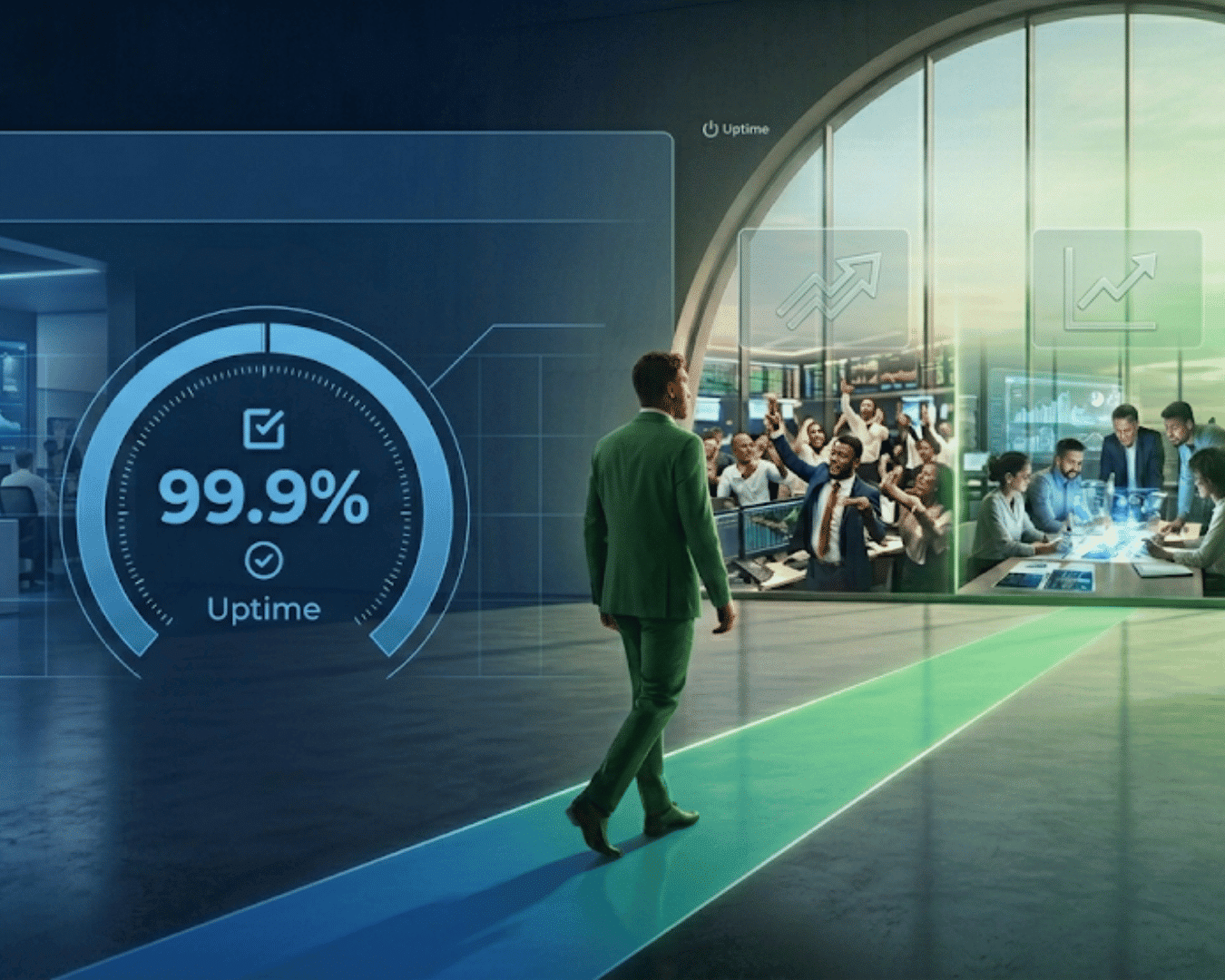
IT outsourcing contracts were historically designed to protect operational continuity. Their metrics reflect that origin: infrastructure availability, incident response time, percentage of tickets resolved. These metrics have a structural flaw: they are easy to meet without creating real value for the business. A vendor can keep the server available 99.9% of the time and, at the same time, let the system degrade at the moments the business needs it most.
The 99.9% trap: a 99.9% availability SLA allows 8.7 hours of downtime a year. If those 8.7 hours fall at peak traffic times (month-end close, high season, banking peak hours), the financial impact can exceed the value of the contract penalties by a factor of 10 to 50.
2. The three types of invisible SLA
Infrastructure SLAs with no business parent. The SLA exists in the contract but has no business metric to justify it. It measures technical availability, not operational results. The vendor can meet it perfectly while the business operates below its needs.
Penalties that expire without being enforced. Many contracts include penalty clauses for SLA breaches. If nobody monitors them actively, the deadlines pass. In the contracts audited by IT Experts we consistently find unenforced penalties worth 1% to 3% of annual value. It is Billing Inertia applied to SLAs.
SLAs out of date with the business. The contract is signed when the business has a certain structure. In year 3 or 4 of a 5-year contract, the business’s critical operations may have changed completely, and the SLAs keep measuring what was relevant when it was signed.
3. What global data says
Leading consulting firms document the ongoing shift toward contracts based on business outcomes:
- 65% of large outsourcing contract renewals already include business SLAs or XLAs tied to direct financial incentives (ISG).
- 15%–20% reduction in Value Leakage when moving from technical SLAs to business SLAs (McKinsey).
- 25% increase in perceived productivity when replacing Service Desk SLAs with user experience metrics (Deloitte).
4. The Cascading KPIs model
McKinsey and BCG propose a framework to redesign SLAs from the top down, from the business outcome to the technical metric:
- Level 1 — Business metric: revenue growth / customer retention / operational resilience.
- Level 2 — Business SLA: conversion rate / transaction abandonment rate / processing speed in high season.
- Level 3 — Technical SLA: API latency < 200ms / DB availability 99.99% / minimum throughput at peak hours.
The key: every technical metric has a business “parent”. If the technical metric is met but the business result is not achieved, the contract detects it and penalizes it.
5. Real cases: the impact of the redesign
Financial sector — digital channels (BCG/McKinsey). An international bank replaced its “server uptime” SLA with “digital transaction abandonment rate at peak hours: maximum 0.5%”. The vendor changed its software architecture within weeks. Result: retained transaction flow worth millions of dollars a year.
Retail & e-commerce — ERP and supply chain (ISG). A global retail corporation moved hosting and ERP to the cloud with the SLA set on “dispatch order processing speed in high season”, aligning the vendor’s financial goals directly with the performance of the e-commerce business.
IT Experts — financial institution, critical infrastructure. In a contract reengineering project ($100M+), IT Experts identified technical SLAs decoupled from the business’s critical operations. Redesigning the measurement architecture was a central part of the intervention. Result: 30% capital savings.
6. How to detect the Watermelon Effect in your contract
Five warning signs:
- Your SLAs do not refer to the business’s critical processes (transactions, closes, seasons).
- There is no formal process to monitor and enforce breach penalties.
- The SLAs have not been reviewed since the contract was signed.
- The Operations team cannot say what impact an SLA breach has on EBITDA.
- The SLA benchmarks were proposed by the same vendor without independent validation.
The IT Experts assessment
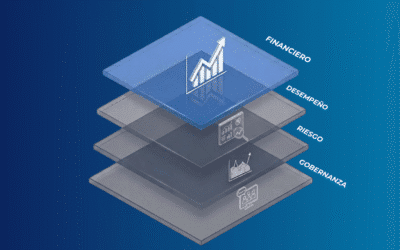
IT Experts audits the current SLA architecture in your contract, identifying the gap between today’s metrics and the metrics that would protect the business’s real value. The initial assessment session lasts 30 minutes, at no cost and with no commitment. It produces an estimate of the leakage range attributable to poorly calibrated SLAs and the intervention levers available for the contract’s phase. Unenforced SLAs are one of the seven dimensions measured by the Contract Maturity Test and the Value Leakage Calculator; the full picture is in Value Leakage in IT contracts. On governance maturity, see the five contract maturity levels; on why measuring hygiene is not measuring value, see the four planes of contract equity.
|
Is your IT contract leaking value right now? We run a 30-minute Governance Maturity Assessment to identify your critical leakage points and quantify the value that is being left on the table today. No cost. No commitment. Just evidence. |
About the author
William D. López is an independent IT consultant with more than 30 years of experience negotiating and governing technology contracts in Latin America. Founder of IT Experts Consultoría, he has led optimization processes in more than 8 countries with cost reductions of 10% to 35%. He publishes weekly analyses on Value Leakage, strategic sourcing and AI for CFOs and CIOs on LinkedIn.